
Leave Your Message
Discover our top-tier compound emulsifying thickeners designed for optimal texture, stability, and mouthfeel in dessert applications.
The modern food industry is undergoing a massive transformation, heavily driven by consumer demands for superior textures, clean labels, and visually appealing products. At the heart of this revolution in the dessert sector is the Compound Emulsifying Thickener For Jelly And Pudding Products. Unlike single-ingredient hydrocolloids, compound thickeners are sophisticated blends of polysaccharides, proteins, and emulsifiers engineered to create synergistic effects. These complexes fundamentally alter the rheological properties of water and dairy-based systems, ensuring that jellies maintain their elastic bounce and puddings deliver a luxurious, melt-in-the-mouth creaminess.
In recent years, the global commercial landscape for food stabilizers and emulsifiers has seen exponential growth. The rising middle class in the Asia-Pacific region, coupled with the Western market's pivot towards premium, plant-based, and low-sugar desserts, has created a surging demand for highly technical hydrocolloid formulations. Manufacturers are no longer satisfied with basic thickening; they require multi-functional compounds that can withstand extreme processing conditions such as Ultra-High Temperature (UHT) pasteurization, varying pH levels, and prolonged shelf-life requirements without compromising the sensory experience.
The industrial production of jelly and pudding heavily relies on the consistency of raw materials. Compound emulsifying thickeners provide a standardized solution that mitigates the natural variability found in agricultural hydrocolloids (like seaweed extracts or tree exudates). By precisely balancing carrageenan, konjac gum, xanthan gum, and emulsifiers like DATEM or mono- and diglycerides, manufacturers achieve absolute batch-to-batch consistency, drastically reducing production waste and quality control failures.
Market analytics project the global hydrocolloids market to reach unprecedented valuations by 2030. This growth is fueled by the functional food trend. Today's jellies are often fortified with vitamins, collagen, or probiotics, while puddings are being reinvented as high-protein, low-fat snacks. A high-quality compound emulsifying thickener is the unsung hero that suspends these active ingredients evenly throughout the matrix, preventing sedimentation and ensuring a flawless appearance.
When analyzing the application of a Compound Emulsifying Thickener For Jelly And Pudding Products, it is essential to separate the distinct rheological requirements of water-based jellies versus dairy-based puddings. For jelly products, the primary challenges are achieving optimal transparency, controlling syneresis (water weeping), and dialing in the exact chewiness and flavor release.
Syneresis is the nemesis of the jelly industry. When the three-dimensional gel network contracts over time, it expels water, leading to an unappealing layer of liquid inside the packaging. Advanced compound thickeners utilize a precise ratio of kappa-carrageenan to konjac glucomannan. This synergy creates a highly elastic, tightly woven molecular matrix that traps water molecules securely. The addition of specific emulsifying agents further lowers the interfacial tension, ensuring that flavor oils and water remain perfectly homogenized, thus drastically extending the visual and structural shelf life of the jelly.
Premium jellies must be crystal clear to showcase suspended fruit pieces or vibrant colors. Impure gums or poorly formulated compounds can cause turbidity. By utilizing highly refined, AI-optimized blending ratios, modern compound thickeners ensure maximum optical clarity. Furthermore, the gel melting point is engineered to match human body temperature. As the jelly enters the mouth, the gel network breaks down rapidly, providing an explosive, instantaneous release of encapsulated flavors rather than trapping them in a rubbery matrix.
From the soft, slurpable texture of drinkable konjac jellies to the firm, sliceable consistency of traditional fruit jellies, the rheology is entirely controlled by the compound thickener. By adjusting the ionic strength and the specific types of hydrocolloids, formulators can design bespoke textures that cater to different demographic preferences, such as softer gels for children and elderly consumers to prevent choking hazards.
Nanchang Tellcan food Science Co., Ltd (hereinafter referred to as Tellcan Food), founded in 2001, is an excellent practitioner of compound food additives and food essence, specializing in the research and development, production and sales of food additives, and the research and development of food technology and food technology. Various types of compound food additives, edible essence and spices produced by Tellcan Food can be used in many fields such as food, beverage and dairy products.
Read more
Unlike jellies, puddings are complex emulsions of water, fat, protein, and carbohydrates. The role of the Compound Emulsifying Thickener For Jelly And Pudding Products here is exponentially more complex, as it must interact with dairy proteins (like casein) and stabilize fat globules to prevent phase separation.
In premium puddings, the emulsifier component of the compound thickener is vital. Emulsifiers such as Sodium Stearoyl Lactylate (SSL) or sucrose esters coat the dispersed fat droplets, reducing the interfacial tension between the fat and the aqueous phase. This creates a stable emulsion that survives the high-shear environments of industrial homogenization. Furthermore, in the growing market of low-fat or vegan puddings, specific hydrocolloid blends act as fat mimetics. They create a micro-particulated gel structure that mimics the rolling, creamy friction of milk fat on the palate, delivering a full-fat mouthfeel with a fraction of the calories.
Most commercial puddings undergo UHT pasteurization to achieve a long ambient shelf life. However, high heat can denature dairy proteins, leading to graininess or flocculation. Our advanced compound emulsifying thickeners contain specific protective colloids (like carrageenan) that interact electrostatically with casein micelles. This interaction forms a protective barrier around the proteins, preventing them from aggregating during heat shock, resulting in an exceptionally smooth, uniform pudding texture.
The future of food science lies in artificial intelligence. By utilizing machine learning algorithms, we can analyze thousands of rheological data points to predict how different gums and emulsifiers will interact under specific processing conditions. AI technology allows us to rapidly prototype and optimize compound thickener formulas, minimizing trial-and-error in the lab. This tech-forward approach ensures we deliver customized solutions that perfectly balance viscosity, gel strength, and emulsifying capacity tailored specifically for our clients' unique jelly and pudding production lines.
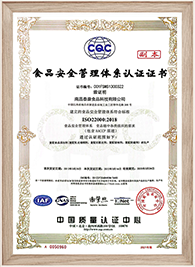
The company has implemented and maintains the HACCP 22000 Food Safety Management System, ensuring reliable products and services. To date, Tellcan has resolved technical challenges for thousands of domestic enterprises and earned prestigious recognitions, including:
 Council Member of China Food Additives Production and Application Industry Association Standing Council Member of Jiangxi Food Additives Association Member of China Dairy Products Industry Association Member of China Bakery & Confectionery Supplementary Materials Industry Association Member of China National Federation of Industry & Commerce Bakery Association Premium Products & Global Sourcing



As we look toward the future, the development of the Compound Emulsifying Thickener For Jelly And Pudding Products is inextricably linked to global sustainability goals and the clean-label movement. Consumers are increasingly scrutinizing ingredient lists, favoring recognizable, naturally derived components over synthetic alternatives. This shift presents both a challenge and an opportunity for food technologists.
Our ongoing research focuses on extracting highly functional hydrocolloids from upcycled agricultural by-products and utilizing green chemistry to modify plant-based emulsifiers. For instance, replacing traditional animal-derived gelatin in puddings and jellies with sophisticated blends of agar, pectin, and plant-derived proteins not only caters to the booming vegan market but also significantly reduces the carbon footprint of the final product. Furthermore, the integration of smart manufacturing—where AI sensors monitor the hydration and dispersion of these compound thickeners in real-time during production—ensures maximum energy efficiency and zero waste in industrial food processing facilities.
In conclusion, a superior compound emulsifying thickener is much more than a simple additive; it is the architectural foundation of modern jelly and pudding products. It bridges the gap between culinary artistry and industrial food science, enabling manufacturers to deliver delightful, stable, and innovative desserts to consumers worldwide. Through continuous R&D and a commitment to technological excellence, we remain at the forefront of this dynamic industry.


Comprehensive compound solutions tailored for every unique dessert formulation.


